
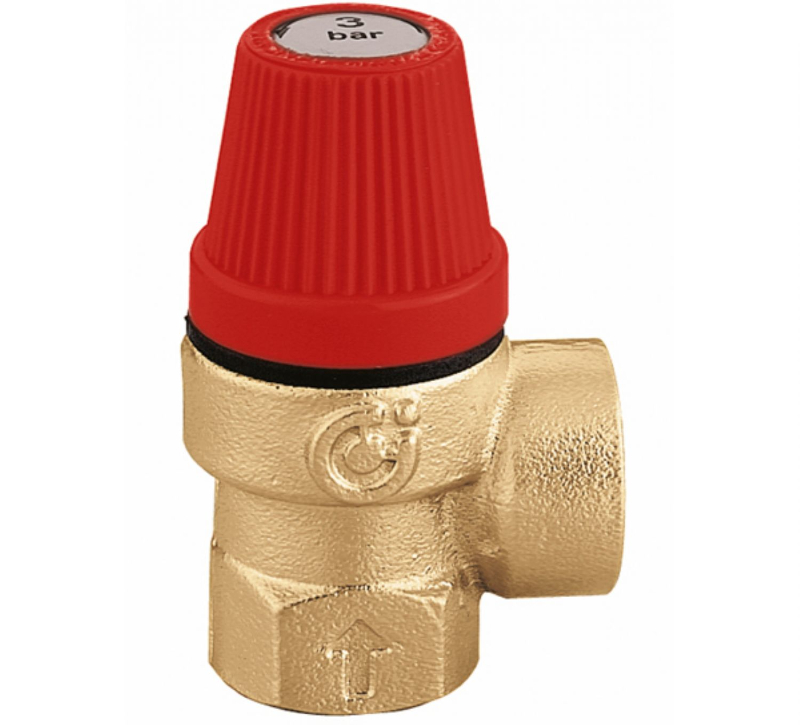
Chris Haycock, Technical Support Engineer at Altecnic, answers some of the common questions installers ask about Safety Relief Valves, from why they discharge to correct installation and replacement.
Safety Relief Valves (SRVs), also commonly referred to as Pressure Relief Valves, play an essential role in protecting sealed heating and hot water systems against excessive pressure. But when a valve starts to discharge or pass water, the SRV itself isn’t always the problem.
Q. What does a Safety Relief Valve do?
Put simply, an SRV protects a system if the pressure becomes too high. They are commonly used in sealed heating systems, hot water cylinders, solar heating systems and water distribution systems.
When pressure reaches the valve’s calibrated set point, the SRV opens and relieves the excess pressure, helping to protect the system and its components.
Q. Why is my Safety Relief Valve discharging?
If an SRV is discharging, it doesn’t automatically mean the valve is faulty. If system pressure has reached its set point, the SRV is doing exactly what it is designed to do.
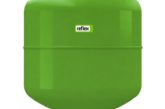
Common causes include an incorrectly sized expansion vessel, incorrect pre-charge or a failed vessel that can no longer accommodate the expansion of water as it heats.
Not sure if the vessel is correctly sized? Altecnic’s Expansion Vessel Sizing Calculator can help determine the correct vessel size for the system.
Q. Why is my Safety Relief Valve leaking or passing water?
If system pressure is correct but the SRV continues to pass water, it may not have reseated correctly after operating.
This can happen if debris becomes trapped beneath the valve seat, pressure has not reduced sufficiently for the valve to close, or the normal operating pressure remains too close to the valve’s set point.
Before replacing the valve, installers should therefore check the SRV and wider system to identify the underlying cause.
Q. How do I choose the correct Safety Relief Valve?
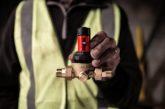
The right SRV depends on the application. Standard valves are available for heating systems, while solar-rated versions are designed for higher operating temperatures. Temperature and Pressure Relief (T&P) valves are also available where both temperature and pressure protection are required.
Materials can differ too, with standard heating SRVs typically using an EPDM diaphragm and solar versions using silicone or elastomeric diaphragms suited to higher temperatures. Valves are also available with or without an integrated pressure gauge.
Installers can explore Altecnic’s Safety Relief Valve range for individual product specifications.
Q. Where should a Safety Relief Valve be installed?
For a sealed heating circuit, the SRV should, where possible, be installed on the flow circuit close to the heat source.
For a water heater, it should be installed on the cold-water supply before the heater, with no fittings or restrictions between the water heater and the valve.
Q. Where should a Safety Relief Valve discharge to?
An SRV should not be connected directly to a drain to comply with G3 Water Regulations, the discharge should pass through a visible tundish with an AUK3 air gap, positioned adjacent to the valve.
As discharged water can be at a high temperature, the final discharge point should also be positioned where it cannot cause scalding or injury.
For more detailed installation guidance, read Altecnic’s Safety Relief Valves In Focus guide.
Q. How do I know if a Safety Relief Valve needs replacing?
The first thing to establish is why the SRV has operated. Simply replacing a discharging valve without investigating the cause could result in the same problem happening again.
Check the wider system first, including system pressure, expansion vessel sizing and pre-charge, the valve seat for debris and the discharge arrangement. If the underlying issue has been resolved but the valve continues to pass water, fails to reseat correctly or shows signs of damage or deterioration, it may require replacement.
Identifying the cause before replacing the valve can help resolve the problem and avoid unnecessary call-backs.
Images: Altecnic