
With business admin an issue for many installers, PHPI caught up with Benjamin Dyer, CEO and co-founder of Powered Now, to find out some steps installers can take to reduce the burden.
Q. Business admin can be a significant part of running a small trades business, what is your take on the amount of time and energy it takes up?
It’s worse than most people outside the trade realise. Our NOW Report found tradespeople spend an average of five hours 20 minutes a week on admin, more than 277 hours a year, and nearly a third spend over seven hours a week on it. Almost two-thirds do this work in the evenings, and over 40% at weekends. That’s not a minor inconvenience. That’s a business owner’s personal time getting eaten away by paperwork that has nothing to do with the trade they’re actually good at.
Nobody gets into heating and plumbing because they love invoicing. They get into it because they’re good with their hands and take pride in a job done properly. Admin is the tax you pay for running your own business, and right now that tax is too high.
 Q. The NOW Report indicates that while 51% of business owners and self-employed tradespeople remain confident about the next 12 months, quoting remains an issue, 55% of respondents indicated they have definitely or probably lost jobs because quotes were sent too slowly. How does this impact a business and what can be done to help?
That statistic should worry every installer reading this. Only 4% get a quote out the same day, and more than a quarter take longer than three days. In that gap, the customer isn’t waiting patiently. They’re getting quotes from two or three other installers, and whoever answers first usually wins the job, regardless of who’d have done the best work. Slow quoting doesn’t just lose you the job in front of you. It loses you the relationship and any repeat work that would have come with it.
The fix isn’t working harder, it’s removing the friction between finishing a site visit and getting a quote in front of the customer. Quote from your phone or tablet on site, with templates and pricing already set up, rather than waiting until you’re back at a desk that evening. The businesses quoting within hours rather than days are the ones consistently winning the work.
Q. Another key takeaway from the report is that late payments remain an issue, with 67% experiencing customers delaying or disputing payments. How can installers ensure they are getting paid for completed work?
This is one of the most damaging findings in the whole report. Tradespeople are currently owed an average of £5,901 in unpaid invoices, and more than a quarter are owed over £10,000. Three in five have simply written off money because chasing it felt like too much hassle. That’s money installers have earned, sitting unpaid, because the system for collecting it is too slow or too manual.
Three things genuinely help. Invoice immediately, ideally the same day, from the van or on site, rather than waiting until you get round to it. Our research found invoicing speed and payment speed are almost identical, the quicker you invoice, the quicker you’re paid. Be clear about payment terms upfront, before the job starts, not after. And use a system that chases automatically, reminders that go out without you having to make an awkward phone call. Most non-payment isn’t malicious, it’s customers deprioritising an invoice that isn’t in front of them. Automated reminders solve a lot of that quietly.
Q. Where can installers find the NOW Report?
The full report is available now on the Powered Now website. It covers quoting speed, payment behaviour, stress levels and the industry’s outlook for the year ahead.
Q. How can Powered Now help installers remove some of the admin burden?
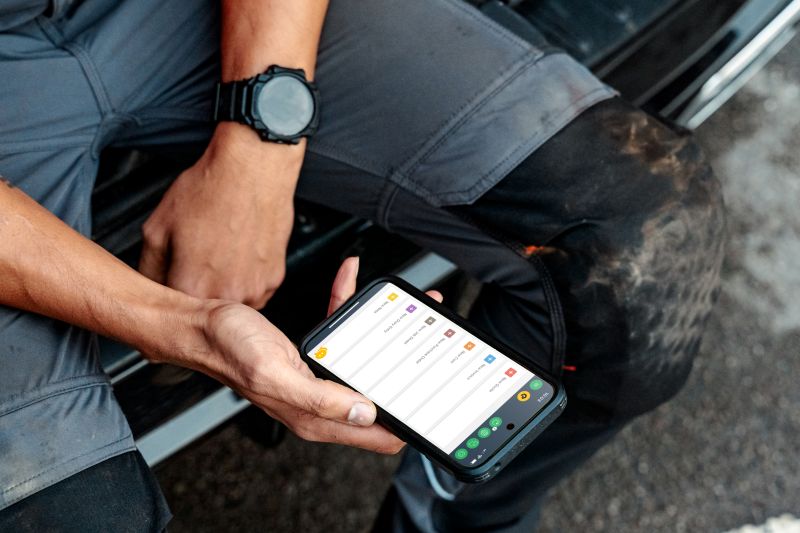
Powered Now brings the whole job lifecycle into one place, from first enquiry through to tax return. Quoting, invoicing, scheduling, customer records, digital certificates and forms, supplier expenses and Making Tax Digital compliance all sit in one system rather than scattered across paper, spreadsheets and separate apps. It works across mobile, tablet and desktop, and works offline too, which matters when you’re in a customer’s basement with no signal. Do the admin once, on site, in minutes. Not later, at a desk, after a full day’s work.
Q. In which other areas can Powered Now assist installers?
Team scheduling and GPS tracking for businesses running more than one engineer. Digital certification and compliance forms, so paperwork for gas or electrical work gets done properly first time. Full customer management, so job history, notes and previous quotes sit in one place instead of in someone’s head or an old text thread.
Q. Powered Now has recently launched an AI Receptionist. How can this help installers?
It answers calls when an installer can’t, up a ladder, under a boiler, mid-job with no way to stop and pick up the phone. Instead of sending the caller to voicemail, where most people just hang up and ring the next name on the list, it has a proper conversation, asks the right questions for the job, and books the appointment straight into the diary. By the time the installer checks their phone, they’re not chasing a vague missed call. They’re looking at a job that’s already confirmed. It’s a direct response to one of the report’s clearest findings, that the moment between a phone ringing and someone answering it is where a lot of work quietly disappears.