Tony Coleman, Technical Services Manager at Makita, explains how effective training can help maintain robust health and safety standards, as well as highlighting how the tools and technology can ensure the best possible results.
Time is money, and for busy plumbing professionals when the jobs are planned in and the pipeline is filled weeks, sometimes months in advance, it can be genuinely difficult to find the time for training. Yet it is crucial, equipping both experienced professionals and apprentices with the knowledge, awareness and reminders required to remain safe on site.
When it comes to power tools and machinery, it should fundamentally offer education on the hazards and risks, which could cause immediate injury, as well as the possible effects on long-term health.
This is because the very nature of plumbing and heating installations, maintenance and repair work translates into daily exposure to noise, dust and vibration. Extended or frequent exposure to higher levels of noise can lead to permanent hearing damage. Dust, even in its mildest form and limited exposure, can lead to skin and eye irritation.
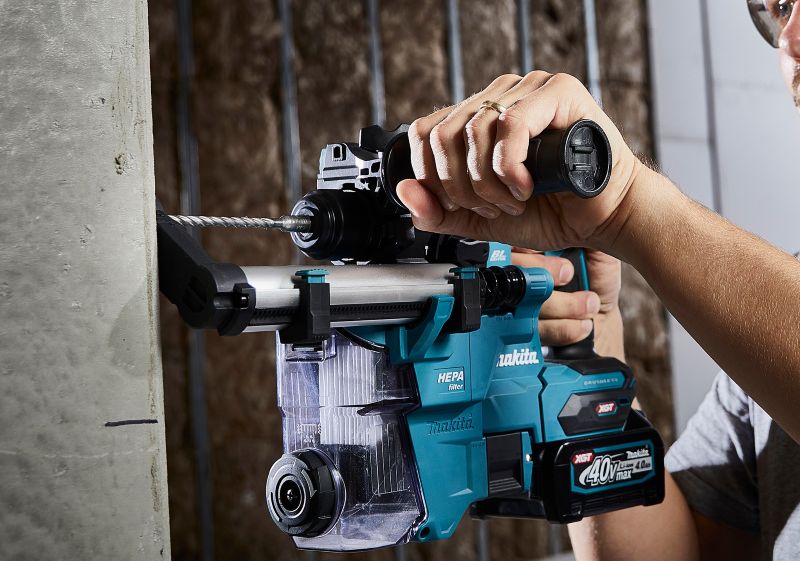
Common tasks, such as chasing out walls to conceal pipework, drilling holes in concrete, brickwork or masonry to either investigate issues or repair pipework means plumbers are regularly disturbing building materials and using a range of power tools such as drills, angle grinders and reciprocating saws.
Tool vibration is also an important health and safety issue. Hand Arm Vibration can lead to conditions such as Vibration White Finger and Carpal Tunnel Syndrome.
Importance of PPE
Look for training courses that highlight all these hazards as well as clear instructions on how they can be mitigated. Training will underline
the importance of personal protective equipment (PPE) and ensure that you are not unknowingly using incorrect or insufficient protection. Also be aware that the Provision and Use of Work Equipment Regulations (PUWER) 1998 requires employers to ensure that anyone using equipment in the course of their work has received ‘adequate training for the purposes of health and safety.’
Aside from the obvious health and safety focus good training should have, product demonstrations are also a valuable use of a professional’s time. Manufacturers are developing and changing their products and technologies constantly to keep improving productivity, power supply and general performance. If you are clear on the capability of what’s out there, you could also be making tasks quicker and easier for yourself on site.
Finally, if you are going to take time off the tools, do research the types of training sessions out there and what they cover to ensure you come away with the specific knowledge and information you want.
Theory & practice
At Makita, although we can come to site for large contractor teams, for the vast majority of professional plumbers, the most valuable sessions are those that take place at one of our four national Factory Service Centres (FSCs). This is because in just one session, our teams cover a wide range of tools and machinery, so you really make the most of the time you have set aside.
Whatever training you do go for, it is highly advisable to check that the session will cover both theory and practical instruction. Ultimately, you want to ensure you work safely and properly protect yourself from the hazards. In addition, the training can make sure you are using the latest tools in the correct way to help maintain professional standards while working efficiently and effectively – to give you that competitive edge.
To find out more about the full portfolio of training Makita can offer, including its ‘Correct and Safe Use of Handheld Power Tools’ and ‘Be Safe’ courses please GOTO www.makitauk.com/training
Image: Makita