

The 2026 version of the CIBSE Domestic Heating Design Guide arrives at an important moment for the building services sector. Mark Krull, Director from LCL Awards, which contributed to the updated guide, explains some of the key areas.
For domestic plumbing and installers, the job is changing fast. Heat pumps, low temperature emitters, improved fabric standards and evolving regulations all mean that traditional rules of thumb are less reliable than they once were.
CIBSE’s updated guide reflects that shift, providing the latest best-practice from initial heat loss assessment through to emitter selection, hot water provision, controls and commissioning. This is especially relevant as schemes like Warm Homes and the Future Homes Standard are driving demand for low carbon systems in-line with wider net zero expectations.
Calculate, assess and ensure efficiency
One of the most important updates in the 2026 guide is the treatment of heat loss. CIBSE has aligned the assessment method more closely with BS EN 12831-1 – the standard for energy performance of buildings – and incorporated the latest weather data, including 28 zones and four outdoor design temperatures.
Heat loss calculations are the starting point for any efficient heating system: if the calculations are wrong, emitter sizing, flow temperatures, plant selection and running performance are likely to be wrong too, which could lead to dissatisfied customers with unnecessarily high bills.
The guide also supports a more measured approach to safety margins. Rather than building extra allowance into multiple stages of the design, the emphasis is on carrying out the assessment properly in the first place and only considering additional tweaks at the end if genuinely needed. That should help avoid oversizing, which has long been a barrier to efficient low temperature operation.
A fabric-first approach is reinforced too, with updated U-value tables covering modern construction methods and changed guidance on air permeability assessment. Where possible, an air permeability test is the preferred route, while SAP 10 methodology is used as a fallback for retrofit work.
Low temperature design
The shift to low temperature heating is one of the strongest themes. Greater prominence is given to designing systems that can operate efficiently at lower flow temperatures, which is critical for heat pumps.
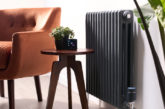
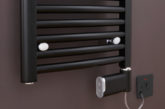
The guide expands coverage of heat emitters beyond standard steel panel radiators and gives improved treatment to fundamental fluid dynamics, modern hydraulic arrangements, circulator control options and low-loss headers. It also covers advanced layouts such as four-pipe heat generators and manifold distribution.
Another key update is the stronger integration of space heating and domestic hot water design. Domestic hot water provision has been revised in-line with BS EN 12831-3:2017, with new information on cylinder sizing, including storage of domestic hot water at less than 60°C and the associated thermal disinfection procedure.
Controls also receive dedicated attention, with a section focused on control strategy and extra information around mixed temperature systems. Installers increasingly need to understand how different parts of a domestic system interact, particularly in homes where space heating and hot water demands vary, or where legacy emitters sit alongside newer low temperature components. Better control strategy supports comfort, efficiency and system stability, and helps clients get the performance they expect from modern equipment.
Design accountability
A notable addition to the guide is the new System Criteria Document. This is intended to provide a clear, auditable record of design decisions, system intent and professional responsibility, with scope to support commissioning and client and designer sign-off in-line with the Building Safety Act. Good documentation improves handover, reduces misunderstandings and make it easier to show that design choices were deliberate.
Better design means fewer compromises on site, more predictable commissioning, improved efficiency and a stronger case for the low carbon systems in general.
Made for installers
CIBSE has continued its focus on usability, ensuring the latest version of its heating design guide remains both practical and technical. The inclusion of worked examples, clearer methodologies, and real-world applications makes it a valuable tool not just for consultants but also for installers actively involved in system design.
The CIBSE Domestic Heating Design Guide is an important influence on the content of related qualifications, such as LCL Awards’ Domestic Heating and Hot Water System Design in Dwellings. By aligning learning outcomes with this guidance, training ensures that candidates are capable of applying best practice in real-world scenarios.
Image: Mark Krull, LCL Awards