As heat pump installations continues to rise in the UK, Ian Little, UK Business Development Manager at Resideo, considers the opportunity for installers to explore heat pump control strategies that could help enhance system performance and comfort, and strengthen long-term customer relationships.
Heat pumps are increasingly establishing themselves as part of the UK’s low-carbon heating future, with DESNZ recording 51,000 retrofit heat pump installations in 2025.
As highlighted in Resideo’s white paper Practical Approaches to Controlling Heat Pumps, growing deployment of heat pumps is creating new opportunities for an increased focus on how systems are controlled and experienced by homeowners.
As the market inevitably matures over time, the success of this transition may not be defined simply by the fitting of a heat pump, but how the overall system supports the comfort and user experience homeowners expect.
No one approach
As the white paper highlights, there is no single control strategy that suits every property. The most appropriate approach depends on factors including property type, system design and homeowner expectations.
Manufacturer-supplied controllers are typically used as the default solution, often managing the entire property through a single thermostat or control point. And, for many suitable homes, this approach can work well.
However, as installers encounter a wider variety of property types and customer expectations, a one-size-fits-all control strategy may not always help optimise the outcome.
Different occupancy patterns, varied room usage, and changing lifestyle requirements all influence how homeowners want to heat their homes. If the controls cannot respond effectively to these needs, customers may perceive the system as underperforming – even when the heat pump itself is operating exactly as designed.
Rather than viewing controls as simply an accessory, they should be considered a part of overall system design, bridging the gap between installation and the day-to-day user experience.
The different roles
One of the clearest findings from the research is that there is no universal control solution. The most appropriate approach depends on the property, system design and homeowner requirements, and understanding the separate roles played by the heat pump controller and dedicated comfort controls comes into play.
While comfort controls and zoning can help homeowners tailor heating around occupancy patterns and room usage, they should always be implemented in line with manufacturer requirements and appropriate system design. As the white paper highlights, achieving the right balance between comfort, efficiency and system performance requires consideration of factors such as hydraulic design, minimum flow requirements and the specific characteristics of the property.
The manufacturer’s controller is responsible for managing the heat pump itself. It oversees critical functions such as flow temperature, weather compensation, and compressor modulation, ensuring the unit operates as efficiently and reliably as possible.
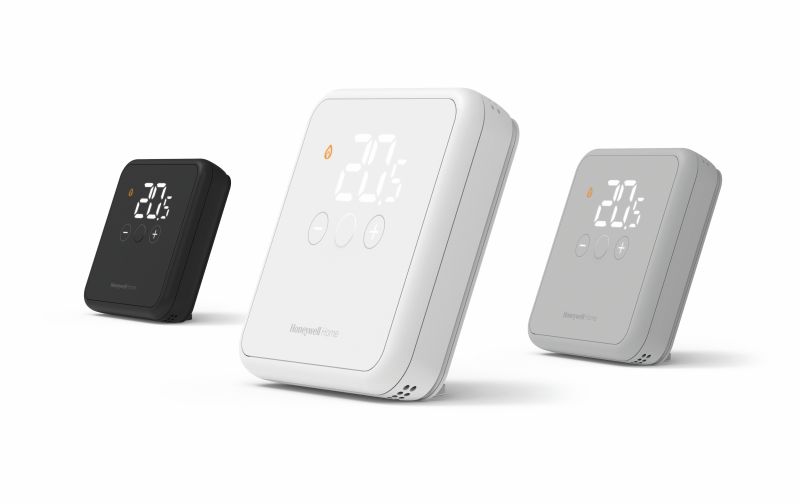
Comfort controls perform a different function. Instead of determining how heat is produced, they manage how that heat is delivered throughout the home. Scheduling, temperature adjustment, zoning, and room-by-room control all sit within this layer, allowing homeowners to tailor heating around their daily routines and individual comfort preferences.
Separating these responsibilities could help generate a more balanced system. The heat pump controller focuses on generating heat effectively, while comfort controls can help align heat demands with homeowner lifestyle patterns.
Supporting outcomes
When correctly specified and configured, smart controls can support improved comfort and help reduce unnecessary energy usage. Yet these benefits are only realised when controls are specified, configured, and commissioned correctly.
A deeper understanding of control strategies enables installers to specify systems more accurately, commission them more effectively, and have more informed conversations with customers from the earliest stages of a project.
Training is central to achieving this. Resideo Academy has been developed to help installers build confidence in both heating controls and their application alongside heat pump systems.
Through instructor-led courses, online learning and the Resideo Academy app, professionals can access flexible training that fits around busy working schedules, supporting every stage from specification through to commissioning and customer handover.
By putting control strategy at the heart of heat pump system design, installers can put themselves in a stronger position to support positive customer outcomes and long-term business growth.
For more detailed guidance, Resideo has published the white paper Practical Approaches to Controlling Heat Pumps.
Image: Resideo