As temperatures begin to drop, staying warm, dry and mobile on site becomes a daily challenge for engineers and installers alike. Carhartt explains how to layer up and choose the right clothes for the conditions.
Plumbing and heating engineers bear the brunt of the cold weather more than most. Staying warm will obviously make you more comfortable, but comfort isn’t the only consideration; cold, stiff hands and numb fingers make for slower, less accurate work and a higher risk of injury. The good news is that modern workwear has moved a long way past piling on jumpers and hoping for the best.
Go for layers
The most effective way to stay warm on site isn’t always one thick coat. Several thinner layers will often work best as air trapped between layers acts as natural insulation and if you start to overheat, removing a layer releases that warm air and cools you down again. It’s a system that works with your body rather than against it.
Everything starts with the base layer. Cotton might feel soft against the skin, but it holds onto moisture, so once you start sweating in a plant room or crawling around in a loft, a cotton t-shirt turns damp and cold fast. A synthetic fabric like polyester is a better bet: lightweight, quick-drying and effective at wicking sweat away from the skin. Carhartt’s Force™ Series range, for example, uses FastDry™ technology to move moisture and includes anti-microbial properties to stop odours building up over a long shift.
The mid-layer’s job is to trap the warmth the base layer lets through, without adding bulk or restricting movement. Fleece and flannel both do this well: fleece stays warm even if it gets damp, while flannel offers a softer, more breathable option. Stretch fabrics such as Carhartt’s Rugged Flex™ build give into the fabric itself so a mid-layer moves with you rather than fighting you.
The outer layer takes the brunt of wind, rain and cold, so it needs to be tough as well as weatherproof. Canvas and ripstop nylon are both strong options, but you also need to consider waterproofing. Carhartt’s Rain Defender™ helps light rain bead and run off, while Storm Defender™ adds a fully waterproof, breathable membrane for heavier or more prolonged exposure, so you stay dry from the weather without getting clammy from your own body heat.
 Getting warmth right
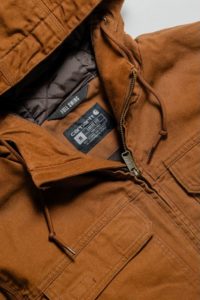
Not every winter jacket needs to do the same job and it’s worth thinking about outerwear as sitting somewhere on a scale, from a light layer for a chilly morning through to serious protection for the depths of winter, rather than reaching for the heaviest coat you own every time the temperature dips.
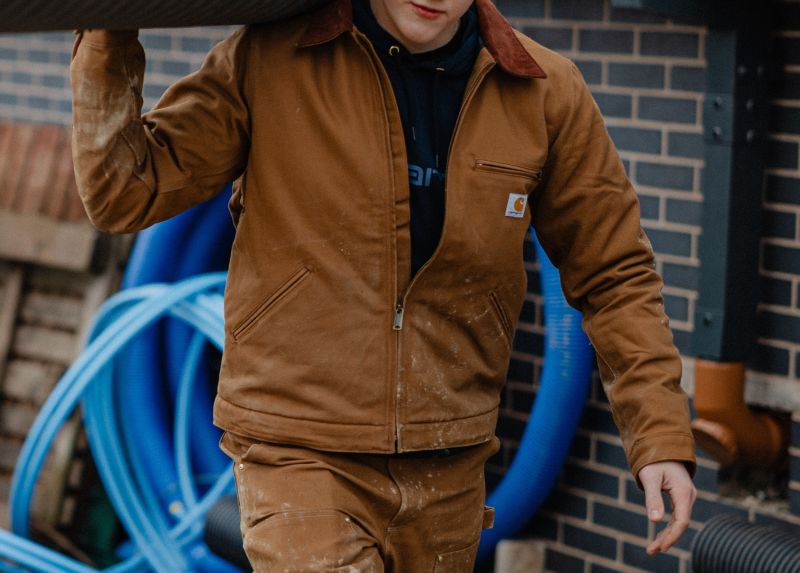
For a first line of defence against the cold, look for a lightweight jacket in duck canvas or denim, ideally with a soft blanket lining. These styles aren’t heavily insulated, but they’re perfect for a cool morning, a late finish or worn as an extra layer over other kit when needed. The Iconic Detroit Jacket is a good example: a cotton duck jacket with a warm blanket-lined body and quilted nylon sleeves, built to be a first line of defence rather than full winter armour.
Once the cold is setting in regularly and you need a warmer outer layer, sherpa lining is what to look for. The soft, fleece-like pile traps warm air against the body so it delivers a noticeable step up in warmth without much extra bulk. The Washed Duck Bartlett Jacket and the women’s Rockford Insulated Jacket both fit the bill here.
For properly cold, exposed conditions, look beyond the lining to dedicated insulation. Fabrics like 3M™ Thinsulate™ trap warm air within thousands of tiny fibres rather than relying on bulk alone, so they add serious warmth without the weight of old-fashioned wadding. The Washed Duck Active Jac uses heavyweight 12-ounce washed duck with a quilted nylon lining and 3M™ Thinsulate™ insulation, along with Cordura®-reinforced cuffs for durability, while the women’s Iconic Washed Duck Sierra Jacket brings the same tough, washed duck canvas together with a sherpa-lined body and hood for warmth without sacrificing mobility.
At the extreme end, for sub-zero mornings, exposed sites and long hours outdoors, look for jackets that combine several forms of protection at once: heavyweight synthetic-down or featherless insulation, a sherpa-lined hood and upper body and technology that blocks the wind as well as trapping heat. The Montana Loose Fit Insulated Jacket ticks every box, combining synthetic down insulation with a sherpa-lined upper body and hood, plus Wind Fighter™ and Rain Defender™ technologies, for all-day cold protection.
 Thinking about outerwear this way, working out roughly how cold and how exposed a job is likely to be, makes it much easier to choose the right jacket, rather than defaulting to the heaviest one in the cupboard.
Kneepads, boots and more…
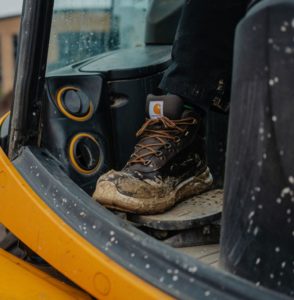
It’s worth applying the same thinking to the rest of the kit too: kneepads for cold concrete and frozen floors, insulated boots with a decent grip for icy surfaces and gloves that still allow enough dexterity for fiddly connections all matter just as much as the coat on your back.
Get the layering right underneath, the outer layer right on top and the details sorted everywhere else, and there’s no reason winter should slow anyone down on site.
Images: Carhartt