
PHPI speaks with Paul Drew, Director, Smart Energy Training, to discover how training requirements in the sector are changing and how installers can make the most of new opportunities.
Q. With over a decade’s experience of providing training in the heating and plumbing sector, how have you seen training requirements alter over the years?
Training in plumbing and heating hasn’t changed as much as it should have over the past decade. At Smart Energy Training, we’re focused on doing things differently and driving that change.
The fundamentals of safety, compliance and technical competence remain at the core of the industry – but the landscape around them is shifting rapidly. Traditional systems like gas fires and wet heating are being replaced by low-carbon technologies and that demands completely new skills.
The reality is most residential and commercial properties are still using gas systems, but employers know that is doing to dramatically change in the years to come.
We are determined to lead from the front and to develop training programmes that are fit for the future. From green skills to emerging technologies, we’re ensuring our offering reflects where the sector is going, not where it’s been.
Q. Which are your most popular courses?
Apprenticeships remain a cornerstone of training across gas engineering, plumbing and electrical as they are an excellent way for students to enter the workplace – and for small businesses to find workers.
But where we are seeing significant growth is in regulatory and transition training. Engineers need to stay compliant, so Gas ACS reassessments and Managed Learning Programmes are consistently in demand. Alongside that, we’re seeing a major surge in green skills including air source heat pumps, solar and EV charging.
The industry is moving – and training has to keep up.
Q. Is there a steady stream of young people approaching you regarding apprenticeship training?
We’re seeing strong interest from young people, driven partly by the scale of opportunity.
It’s essential the next generation joins the industry, so the country has the engineers required. Part of our role is to promote the trade as a lucrative, viable option – and then to give young people a faster smarter and more engaging route into the industry.
Q. From your interaction with learners, how do you judge heating engineers are adapting to lower carbon heating solutions?
There are some experienced engineers who are reluctant to make the switch to low carbon solutions but, overall, we are seeing a positive shift in attitudes.
Engineers recognise that lower carbon heating is becoming central to the future of the trade, but continued training, practical experience and clearer market signals will be essential to build confidence and accelerate adoption.
Many newer entrants to the industry are embracing low carbon systems such as air source heat pumps, hybrid systems and improved heating controls as a natural part of modern training. They tend to be receptive to the environmental benefits and understand that future regulation and market demand will make these technologies increasingly important.
For existing tradespeople, we do see some concerns and misconceptions about installation complexity and system performance, but others can see the potential for new work that retraining can bring.
There is a massive opportunity for those who get ahead of the curve and obtain low carbon qualifications.
Q. How would you like to see the heating and plumbing training environment progress in the coming years?
The future of training is about speed, flexibility and real-world impact.
Employers don’t want learners who are just qualified on paper – they want people who can add value from day one. That means combining technical skills with practical application and commercial awareness.
We’re investing heavily in eLearning, immersive training environments and digital platforms to deliver that. But it’s not just about technological understanding and technical ability. Having listened to the employers we work with, we also focus on soft skills such as communication, business understanding and customer interaction which help to make apprentices useful to a business right from the off.
Training needs to reflect the full reality of the job.
Q. A competent, skilled workforce is vital to ensure installations are safe, compliant with regulations and efficient. How does the Smart Energy Training ensure learners have the best experience and instruction when undertaking training?
Safety and compliance are non-negotiable in the gas and heating industry as mistakes can be deadly. Every learner who comes through Smart Energy Training is trained to operate safely, confidently and competently in real-world environments.
We go beyond traditional classroom-only delivery. Our approach is built around a cycle of learn, apply, reflect and embed, using real equipment, real scenarios and repeated practice. It’s the difference between understanding something once and being able to do it consistently on site.
Q. The business is currently centred on the Midlands. Does Smart Energy Training have any plans for further expansion?
Our goal is to build a national training network that genuinely supports the installer sector. At Smart Energy Training, we are committed to delivering the very best learner and employer experience at every touchpoint. It’s important that as we scale, that standard doesn’t change.
Every new centre, every new programme and every partnership has to meet that same benchmark.
Since becoming part of the Realise Training Group in 2025, we’ve accelerated that ambition significantly. The traditional college model of fixed term starts, long breaks and inconsistent delivery isn’t fit for modern trades.
We’re replacing it with a model that works for employers: monthly starts, consistent delivery, no downtime and immediate impact.
Our growth is happening fast. We’re progressed from a single centre at the start of 2026 and have plans to scale to 12+ locations by year-end through a combination of new site development and strategic acquisitions.
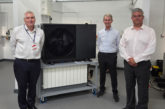
Image: Paul Drew, Smart Energy Training