
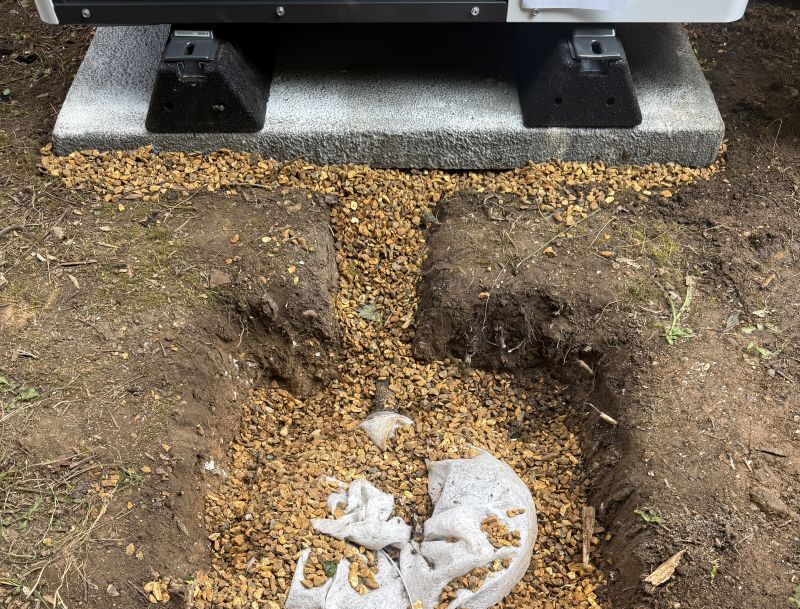
Luke Parry, Area Sales Manager at DiversiTech International, provides some thoughts on condensate removal from Air Source Heat Pumps.
Q. Why is some form of condensate removal required with an Air Source Heat Pump?
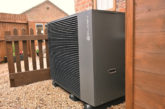
During normal operation, an air source heat pump can generate significant amounts of condensate from the outdoor unit, with volumes varying according to system usage and ambient humidity levels. As the unit extracts heat from the outside air, moisture naturally condenses and accumulates on the heat exchanger. If this condensate is not correctly drained, it can accumulate around the base of the unit, potentially leading to property damage, creating slip or ice hazards, and increasing the risk of system faults or damage caused by water build-up.
Q. What options are available for installers?
Installers typically have two main options for managing condensate discharge: directing it to a dedicated soakaway or connecting it to the property’s wastewater drainage system. To support effective drainage, the external unit should be installed on a raised base, allowing condensate to flow away naturally under gravity. This helps prevent water from pooling around the unit, reduces the risk of ice formation, and avoids water collecting on adjacent pathways or surfaces.
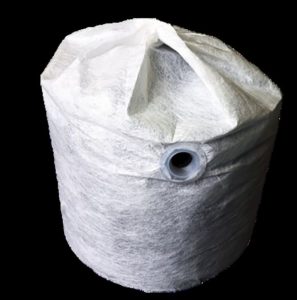
Q. What are the benefits of the ASHP-SOAK from DiversiTech?
The ASHP-SOAK is a purpose-designed, pre-bagged soakaway that provides a simple and effective solution for disposing of condensate from domestic air source heat pumps where access to a suitable drainage connection is not available. Suitable for use with all domestic heat pump brands and models, it is constructed from a geotextile material that helps prevent soil ingress and maintain long-term performance. The unit features a 32mm inlet and is capable of handling condensate volumes of 10–15 litres per hour. It also supports compliance with MIS 3005 installation requirements and is designed in accordance with BRE 365 guidance.
Q. Do you have any installation advice?
Before installing the ASHP-SOAK, identify the condensate discharge route from the heat pump and select the most suitable location for the soakaway. To minimise the risk of moisture affecting building foundations, the soakaway should be positioned at least 600mm from any wall. The ASHP-SOAK is designed to be installed within an excavation approximately 500mm deep and with a minimum diameter of 400mm. When positioning the unit, ensure the 32mm inlet faces towards the property to facilitate connection to the condensate discharge pipework. Whether the heat pump is floor-mounted or wall-mounted, the condensate pipework should be routed from the unit and securely connected to the soakaway to allow for effective drainage.
Please note: If the air source heat pump uses R290 refrigerant, you cannot route drainage through the wastewater drain. It needs to be routed through an independent soakaway.
Q. Does the DiversiTech ASHP-SOAK meet appropriate regulations?
The ASHP-SOAK supports compliance with MIS 3005 installation requirements and is designed in accordance with BRE 365 guidance. It is suitable and compatible with all domestic air source heat pump brands and models.
Click here for an installation video for the ASHP-SOAK
Images: DiversiTech