As heat pumps move into the mainstream, installers face growing expectations around quality, transparency and customer care. Harry Budd, Digital Marketing Director at Logic4training explores evolving consumer protections under the Warm Homes Plan and how installers can meet higher standards and build trust with consumers.
The problem with heat pumps is no longer the technology; we know that, when properly designed, installed and commissioned, heat pumps deliver effective hot water and heating to a wide variety of homes. However, as the technology begins to spread to the mainstream, one of the most significant barriers is consumer confidence.
The perception of the retrofit market has unfortunately been eroded by failures under previous schemes. As the Warm Homes Plan is rolled out, customers are looking for reassurance that they are making a good investment and that they’ll be supported throughout the installation process.
Consumer protections
The Department for Energy Security and Net Zero (DESNZ) is consulting on stronger consumer protections under the Warm Homes Plan to ensure these mistakes are not repeated. Proposals aim to simplify the retrofit system for consumers, strengthen accountability and provide a swift and straightforward route to redress.
The consultation proposes establishing a single organisation to guide customers through the retrofit journey, introducing clearer responsibilities for everyone involved in the delivery process and closer monitoring of quality to help identify issues earlier. There is also the possibility of the creation of a national register of approved installers and retrofit professionals, making it easier for consumers to find businesses that are authorised to work on government-funded schemes.
If introduced, these changes could increase transparency across the retrofit sector while giving consumers greater confidence in choosing qualified installers. For most installers, they offer an opportunity to demonstrate the high standards they are already adhering to while building trust with customers.
Raising standards
Meanwhile, MCS has introduced the redeveloped standard with an increased focus on the entire customer journey, rather than technical competence alone. Understandably, some installers may be concerned that higher standards will mean more paperwork or additional costs, however, the changes are intended to improve consistency and raise confidence in the sector, rather than create unnecessary barriers.
For installers who are new to heat pumps or not yet ready to commit to full MCS, there is still the option of working through an MCS umbrella scheme. Umbrella providers support installers with system design, compliance and certification, allowing them to gain experience, build a track record and develop the processes needed before progressing to direct certification.
Trusted advisor
As the market moves beyond early adopters, installers will increasingly be working with homeowners who are less interested in the technology and more concerned by practical questions. How much will it cost? Will the house stay warm? Will it save money in the long term? For the first time, consumers have a choice about their heating system and they need honesty and transparency to help them make the decision.
Installers will need to communicate clearly and avoid jargon, while providing reassurance and evidence that a heat pump is the right solution for their home. Schemes such as Nesta’s Visit a Heat Pump allow prospective customers to see heat pumps operating in real homes and provide a valuable peer-to-peer perspective.
Investing in knowledge
Of course, technical competence will remain essential, but the ability to build trust and deliver a positive customer experience will also be a key differentiator. Formal training and qualifications provide the technical foundation and when combined with ongoing professional development, helps installers stay current with changing standards, new products and best practice.
Manufacturer training is also a valuable knowledge stream for installers, providing free insight into specific systems and controls. Industry events and trade shows are another low-cost option, giving installers the chance to share experiences with peers and hear first-hand about the challenges and solutions emerging across the sector.
Building confidence
Stronger consumer protections under the Warm Homes Plan, together with MCS’s evolving standards, have the potential to rebuild trust in home energy improvements. By combining high-quality installations with clear advice, ongoing training and a strong focus on customer experience, installers can help overcome the barriers of uncertainty and position heat pumps as a trusted, mainstream heating solution.
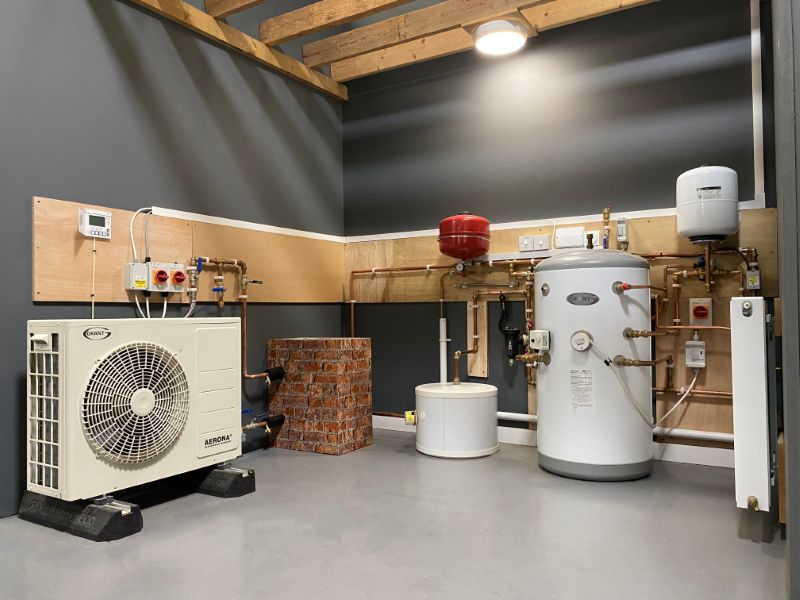
Image: Logic4Training