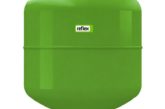

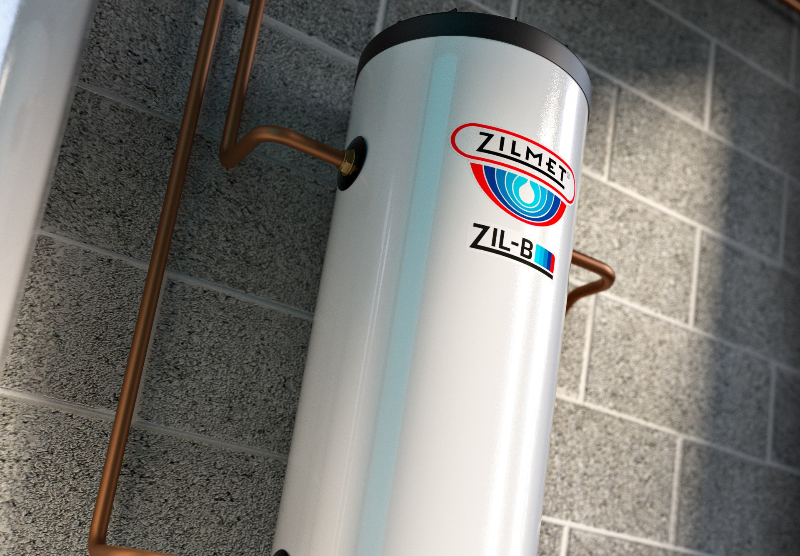
George Knowles, Project Engineer at Zilmet, chats with PHPI about buffer vessels and the Zilmet Zil B.
Q. Why can installers run into issues with a heat-pump system design, even when the heat pump itself is correctly specified?
Because the heat pump is only one part of the job. A system can still underperform if the water volume is too low, the flow rates between primary and secondary circuits are not well matched, or zoning and controls allow the heat pump to see unstable conditions.
In those cases, you can have the right heat pump on paper but the wrong system behaviour in practice. Industry guidance notes that where minimum volume cannot be maintained, hydraulic separation and sometimes additional volume are required to prevent short cycling and protect efficiency.
Q. What problem is a buffer vessel actually solving on an ASHP job?
At its simplest, it adds water volume and stabilises the system. On a heat-pump job, that matters because the unit needs a sensible volume of water in circuit and stable flow conditions, especially when demand is low or zones are closing down. ZIL-B is positioned specifically to maintain minimum volume, improve operating efficiency and reduce compressor short cycling.
Q. When does a buffer vessel earn its place, and when is it just being fitted by habit?
It earns its place when the system genuinely needs either extra water volume, hydraulic separation, or both. Typical examples are highly zoned systems, mixed emitters, systems where minimum volume cannot be guaranteed, or situations where primary and secondary flow conditions are unlikely to stay stable.
It is less about following habit and more about whether the system design will behave properly without it. Guidance for zoned heat-pump systems is clear that where minimum volume cannot be maintained, hydraulic separation and sometimes a buffer tank are likely to be required.
Q. ZIL-B is described as both a buffer and a hydraulic separator. What does that mean in practice for the installer?
In practice, it means one vessel is doing two jobs. First, it stores additional water volume, which helps system stability and reduces short cycling. Second, it can provide hydraulic separation between the primary heat-pump circuit and the secondary heating circuit, so the heat pump can see the conditions it needs while the distribution side can do something different if required.
Q. How does the wrong buffer setup show up on a live system?
Usually through poor system behaviour rather than one dramatic failure. You may see frequent compressor cycling, unstable temperatures, awkward control behaviour, flow mismatch, or a system that technically runs but never seems settled. If the system volume is too low or zoning keeps changing conditions, the heat pump can end up starting and stopping too often. Zilmet’s own positioning for ZIL-B is that it maintains minimum volume and reduces compressor short cycling, which is exactly why correct setup matters.
Q. How much does insulation on a buffer vessel really matter once the system is running?
It matters because any heat you lose from the vessel is heat you paid to generate. If the buffer is there to help stability and retain useful energy in the system, it makes little sense to then let that energy leak away unnecessarily. ZIL-B uses premium polyurethane insulation and is explicitly positioned around minimal heat loss and retained surplus energy, so insulation is not just a cosmetic feature. It is part of overall system efficiency.
Q. ZIL-B is available in 25, 50, 80 and 100 litres. What should guide the choice between them?The right size should be guided by the system, not by habit. The key considerations are the heat pump’s minimum volume requirement, the layout of the heating system, zoning, emitter volume, flow conditions and whether the vessel is being used mainly for added volume, hydraulic separation, or both.
ZIL-B is available in 25, 50, 80 and 100 litres, so the sensible approach is to match the vessel to what the system actually needs rather than defaulting to the same size every time. 12L & 18L vessels are being added to the range
Q. Why is short cycling such a problemon heat-pump systems, and how can the right buffer help prevent it?
Short cycling means the heat pump starts and stops too often instead of running in longer, steadier cycles. That is bad for efficiency, bad for stable operation and not what you want for longevity either.
A correctly applied buffer helps by increasing the water volume in circuit and smoothing out conditions so the compressor is not constantly reacting to small swings in demand. Zilmet explicitly positions ZIL-B as reducing compressor short cycling and improving heat-pump efficiency.
Q. How does a buffer vessel help when emitter volumes and heat-pump flow requirements are not naturally well matched?
That is one of the classic cases where a buffer earns its place. If the heat pump wants one set of flow conditions but the emitters and controls create another, a buffer with hydraulic separation can help decouple the two sides and maintain more stable operation. Industry guidance for zoned systems notes that hydraulic separation is often needed where minimum system volume has to be protected, and a buffer tank can provide both separation and extra volume in one component.
Q. What are the most common mistakes installers make when adding a buffer vessel to a heat-pump system?
The biggest mistake is fitting one without being clear what job it is meant to do. If it is there for extra volume, hydraulic separation, zoning support or control stability, the rest of the design needs to reflect that.
Other common mistakes are treating the buffer as a generic box rather than part of the system design, not thinking through flow relationships on the primary and secondary sides, and underestimating the importance of correct connections, venting, drainage and insulation. ZIL-B includes additional venting and drainage connections, an adjustable wall bracket on the smaller models, and a design specifically aimed at heat-pump efficiency and short-cycling reduction, so the product is meant to support good practice rather than compensate for poor design. Also our foot accessory lets you drain 100% of the buffer.
Image: Inta