
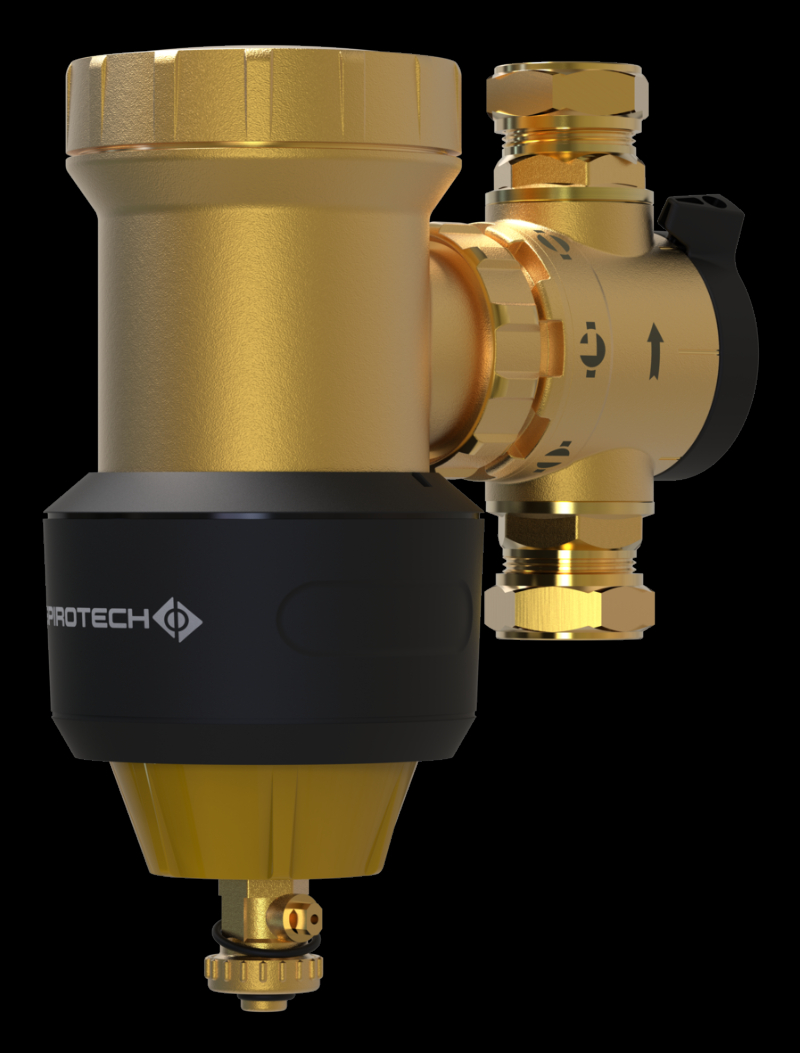
With heat pump installations continuing, installers need to deliver systems that perform efficiently and stay that way. Following the launch of the SpiroTrap HPF, we caught up with Mark Boccetti from Spirotech, to discover more about this new filter.
Q. Why do heat pumps need effective filtration?
For installers, protecting the heat pump is non-negotiable—and filtration plays a key role in that. While it’s not about a ‘special’ filter as such, most manufacturers now specify some form of strainer or mesh protection to prevent debris reaching the plate heat exchanger (PHE).
The challenge is that PHEs are built with much narrower waterways than traditional heat exchangers. That means they’re far less forgiving when it comes to contamination. Even small amounts of magnetite, sludge or installation debris can restrict flow, impact efficiency, or in worst cases, cause system faults.
From an installers’ perspective, fitting a robust filter isn’t just ticking a box—it’s about protecting your install, your reputation, and reducing the risk of call-backs.
Q. How does the SpiroTrap HPF improve dirt separation?
This is where the SpiroTrap HPF has been designed with installers firmly in mind. Rather than relying on a single method of filtration, it combines three technologies working together:
– Powerful magnetic capture: Six 12,000-gauss magnets surround the dirt chamber, pulling out even fine magnetic particles like magnetite
– Full-flow mechanical filtration: A 160-micron mesh ensures that all system water is filtered—there’s no bypass, so nothing slips through
– Spirotube technology: Reduces turbulence in the chamber, helping particles settle more effectively
What really sets it apart is the self-cleaning internal design. By redirecting some of the system’s kinetic energy, the HPF actively improves how dirt is collected and retained. For installers, that means more effective protection without added complexity.
Q. Where should it be installed?
Best practice is to install the SpiroTrap HPF on the return line to the heat pump.
This positioning ensures that any circulating debris is captured before it reaches the most sensitive components, particularly the PHE. It’s a simple step that makes a big difference in long-term system reliability.
Q. What options are available?
Flexibility on site is key, and the SpiroTrap HPF has been designed with that in mind. It is available in a range of connection sizes, including 22mm, ¾”, 28mm, 1” and 1¼”, making it easy to integrate across a variety of domestic and light commercial heat pump installations. Whether working on a compact residential system or a larger setup, installers have the versatility they need to fit the unit with confidence.
Q. How easy is it to service?
Routine servicing requires only basic tools-an adjustable spanner, a container or hose. The process itself is fast:
– Switch off the heat pump
– Set the valve to service mode
– Remove the magnet
– Open the drain valve and flush for a few seconds
– Reassemble, repressurise, and restart
The whole process takes just a matter of minutes, helping keep servicing efficient and hassle-free. For installers offering ongoing maintenance, that’s a real advantage.
Q. Any installation tips for engineers?
As with any component, good installation practice makes all the difference. Key points to keep in mind:
– Ensure pipework is properly supported and clipped
– Leave enough clearance around the unit for servicing
Allowing space to access the filter easily will save time during maintenance visits and help avoid unnecessary complications down the line.
Image: Spirotech