

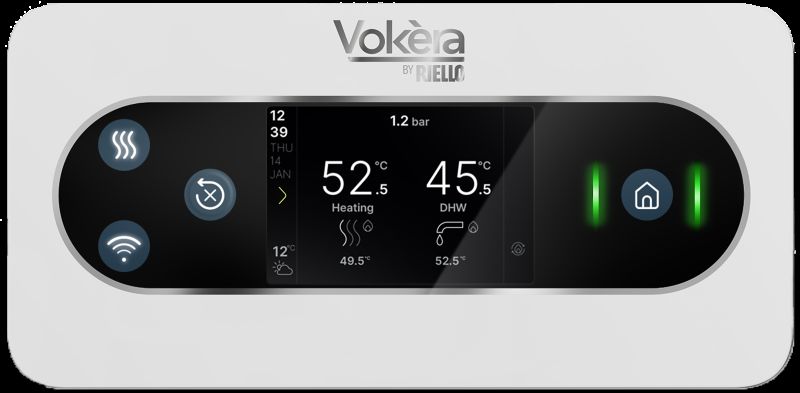
Marking over 40 years manufacturing heating solutions, Neil Mattock, Marketing Director at Vokèra, takes a look at the transition from an industry once reliant on fossil fuel boilers to today’s highly regulated, lower carbon sector shaped by technological progress, stricter standards and changing consumer expectations. Vokèra is part of Riello, a provider of high efficiency heating and climate solutions.
By the mid-1980s, gas central heating had become the dominant form of heating in the UK. Penetration rose from around 5% of households in 1960 to nearly 50% by 1977, eventually exceeding 90% by the mid‑1980s. During this period, combination boilers began gaining momentum. Although introduced in the late 1960s, early versions often struggled with inconsistent water hardness, variable weather conditions, pressure loss, and insufficient hot water performance. More powerful models existed but were typically too large or expensive for most homes.
Technological improvements in efficiency and reliability throughout the 1980s transformed the combination boiler into a practical and mainstream solution. This evolution reduced installation complexity, saved space and reshaped domestic heating practices. It was during this “combi revolution” that the Vokèra brand was introduced in 1983.
The latter part of the decade also brought structural changes. The privatisation of the gas industry created a competitive market regulated by Ofgem. Meanwhile, the 1984 Building Act placed a growing, though still early, emphasis on energy efficiency. The 1980 Housing Act’s Right to Buy policy drove more homeowners to invest in heating upgrades as they assumed responsibility for their properties.
The Efficiency Shift
Condensing boiler technology remained optional for more than 20 years. This changed in 2005, when regulations required all new and replacement gas boilers to be condensing models, representing a significant improvement in seasonal efficiency performance.
The shift from typical efficiencies of 60–70% to efficiencies above 90% marked a substantial regulatory milestone. Initially, this raised concerns among installers and consumers due to higher installation costs, the need for additional training and more complex system requirements. Over time, however, installers adapted, and condensing boilers became the standard across UK homes.
Recent Regulatory Developments
In 2018, the Boiler Plus standards introduced the first major update since 2005. These requirements set a minimum ErP efficiency of 92% and mandated the installation of time and temperature controls when replacing or adding a boiler, unless already present.
These changes reflected broader environmental priorities. In 2019, the UK generated more electricity from zerocarbon‑ sources than from fossil fuels for the first time. That same year, the government set a legally binding target of achieving NetZero‑ greenhouse gas emissions by 2050, accelerating the pace of innovation in the heating sector.
A New Generation of Heating Solutions
Today’s heating technologies reflect decades of incremental efficiency and performance improvements. Modern combination boilers, including those in Vokèra’s current range, deliver high efficiency and are increasingly compatible with smart controls and connected home ecosystems. These systems typically achieve ErP A rated performance while enabling homeowners to manage heating more precisely through digital interfaces.
At the same time, the industry is expanding beyond gas boiler optimisation. As the UK progresses toward its decarbonisation objectives, alternative low carbon heating solutions are gaining prominence. Heat pumps are becoming more widely adopted, and Vokèra’s entry into this market aligns with the broader industry transition toward lower carbon technologies.
Hydrogen ready boilers represent another possible pathway, designed to operate on natural gas today but capable of being adapted for future hydrogen blends. The government may provide further clarity on the potential role of hydrogen in heat decarbonisation, although both the timeline and scope remain uncertain.
The sector now faces a transitional period in which multiple heating technologies coexist. The best option for each property depends on building type, existing infrastructure and specific user requirements. Installers therefore require a broader technical skill set, while manufacturers must balance current market needs with evolving long term sustainability considerations.
Looking Ahead
As of 2026, modern condensing boilers demonstrate notable advances in performance, with many models exceeding the minimum ErP efficiency. Vokèra’s Pinnacle and Synergy ranges, for example, achieve efficiencies of up to 94%. Smart connectivity, advanced diagnostics and more intuitive controls—far beyond what was imaginable forty years ago—are now common features.
Looking forward, the decarbonisation conversation includes several potential routes: hydrogen ready boilers for properties suited to gas infrastructure, heat pumps for buildings compatible with low temperature systems and hybrid solutions that combine both technologies. This diversification reflects the industry’s commitment to providing practical options suited to different property types and consumer needs.
Government initiatives continue to influence decision-making. The Boiler Upgrade Scheme encourages homeowners to consider heat pumps, while the recently announced Warm Homes Plan includes significant investment in upgrading homes with energy efficient heating solutions, including heat pumps, solar panels and batteries, with additional support for low income households.
The sector stands at an important moment. Manufacturers are continuing to develop advanced gas boiler technologies while also investing in lower carbon alternatives. Progress over the next decade will depend on collaboration among manufacturers, installers, policymakers and consumers to deliver heating solutions that support long term sustainability without compromising reliability, performance or comfort.
Image: Vokèra