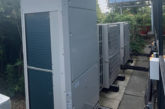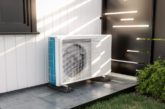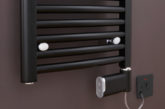

Rick Clarke, Product Manager, NIBE UK takes a look at single appliances through to complete HVAC systems assessing where domestic and light commercial HVAC begin to overlap.
As low-carbon technologies become more widely adopted, homes are often no longer served by a single heating appliance. They are increasingly made up of integrated systems that combine heating, ventilation, controls and, in many cases, cooling. The complexity of domestic HVAC is beginning to resemble what has long been common in light commercial and commercial projects.
The shift is not from domestic to light commercial. It is from single appliances to complete HVAC systems.
System thinking
Heat pumps have been a major driver of this change. It is critical to ensure correct system design, hydraulic balance and appropriate controls for heat pumps to operate at maximum efficiency. Performance is no longer determined by the appliance alone, but by how well every part of the system works together.
Add mechanical ventilation, smart controls and the growing conversation around comfort cooling, and the modern home begins to look very different from what installers were working on a decade ago.
This is where the skills required start to mirror those needed in larger projects. Understanding how multiple components interact, how to manage flow temperatures, how to balance systems correctly and how to set up controls for long-term performance becomes critical.
System performance
When projects move beyond a single unit and into integrated heating and cooling systems, the focus naturally shifts. The questions are no longer simply, “Is the unit correctly sized?” and “Is it installed according to the manufacturer’s guidance?” Instead, they also include “How do the heating, ventilation and controls work together?” “Is the hydraulic design supporting long-term efficiency?” and “Will the system remain stable and easy to maintain over time?”
In these scenarios, controls move from being an accessory to being central to performance. Commissioning becomes far more important. Small oversights that might have had minimal impact on simpler systems can significantly affect comfort and efficiency when multiple components are working together.
Details matter
Industry experience continues to show that underperformance in low-carbon systems is often linked to design, commissioning and operation. As systems become more complex, this effect is magnified. Incorrect settings, poor balancing or a lack of understanding of how controls should be configured can reduce performance significantly. The installer’s role therefore becomes not simply about fitting equipment but also about delivering a correctly functioning system.
This is a natural evolution of the installer’s skillset. Those already working with heat pumps are becoming increasingly familiar with these requirements: attention to system design, careful commissioning and an understanding of how systems behave over time.
These are precisely the same disciplines that have long been required in light commercial and commercial HVAC projects.
Beyond heating
As homes become more airtight and energy efficient, ventilation and indoor air quality are playing a larger role in overall comfort. At the same time, customer expectations are changing. Conversations about overheating and cooling are becoming more common, particularly in new-build properties and apartments.
This means installers are no longer dealing purely with heating. They are working with complete indoor climate systems, where heating, ventilation and cooling need to be considered together.
The expertise required to manage these elements is increasingly aligned with what has traditionally been seen in larger, more complex projects.
System-level backing
With greater complexity comes a greater need for support. Installers moving into this type of work benefit from access to system design advice, technical guidance and clear commissioning support.
Understanding how components are intended to work together, having confidence in compatibility and being able to access expert assistance when needed all contribute to successful outcomes. As systems become more integrated, the relationship between installer and manufacturer becomes even more important.
This is particularly true when projects move beyond individual dwellings into apartment blocks, shared systems or light commercial environments such as schools or offices, where multiple units and controls need to operate in harmony.
An evolution of skills
For installers already trained in heat pumps, many of the foundations are already in place:
– An understanding of low-temperature heating
– Familiarity with system design and emitters
– Experience with commissioning and controls
– Awareness of the importance of hydraulic balance
Building on these skills to work with more integrated HVAC systems is less of a leap than it may first appear. The principles remain the same; the scale and level of integration simply increase.
Spending time understanding how ventilation, cooling and controls interact with heating systems and working closely with manufacturers who can offer system-level support, makes this transition far more straightforward.
Complete systems
As low-carbon heating continues to become standard in UK homes, the role of the installer is evolving. The focus is shifting from fitting individual appliances to delivering complete indoor climate systems that must perform reliably for many years.
This is not a move away from domestic work, but an evolution of it.
The skills required to deliver high-performing systems in modern homes are increasingly similar to those needed in light commercial and commercial environments. Installers who are already developing expertise in heat pumps, controls and system design are well placed for this future.
Successful HVAC installations, whether domestic or light commercial, rely on the same fundamentals: sound system design, careful commissioning and the confidence that every component will work together as intended.
Image: NIBE