

Ben Perris, Sales Director for Indoor Climate Solutions at Wavin, takes a look at UFH and heat pump performance.
Following the announcement of the Warm Homes Plan, the UK’s heating market is rapidly shifting away from fossil fuels toward more low-carbon alternatives – with heat pumps at the forefront of that transition. According to data from the Microgeneration Certification Scheme (MCS), more than 60,000 MCS certified heat pumps were installed in the UK in 2024 – the most installations for a single year.
This data demonstrates a clear indication of increased demand, driven by government’s continued focus on new regulation – from Future Homes Standard to Warm Homes Plan – designed to cut carbon emissions in homes and position heat pumps at the centre of the solution in the UK’s new heating ecosystem.
Crucially for installers, it’s important to understand that a large factor driving consumer demand for low-carbon heating alternatives in the home is price. In 2025, new research conducted by Wavin revealed that amongst consumers seeking sustainable heating solutions, cost savings emerged as the leading consideration, with nearly a quarter (22%) prioritising it, closely followed by energy efficiency at 21%. With heat pumps operating at lower flow temperatures, homeowners will only start to realise the savings on offer if systems are designed to work at their most efficient.
Efficiency
Heat pumps have earned their reputation as a sustainable, cost-effective and energy efficient heating solution. However, it’s important to recognise that the vast majority of UK homes aren’t built to work with these systems yet, with them working at much lower temperatures than conventional systems such as boilers and radiators.
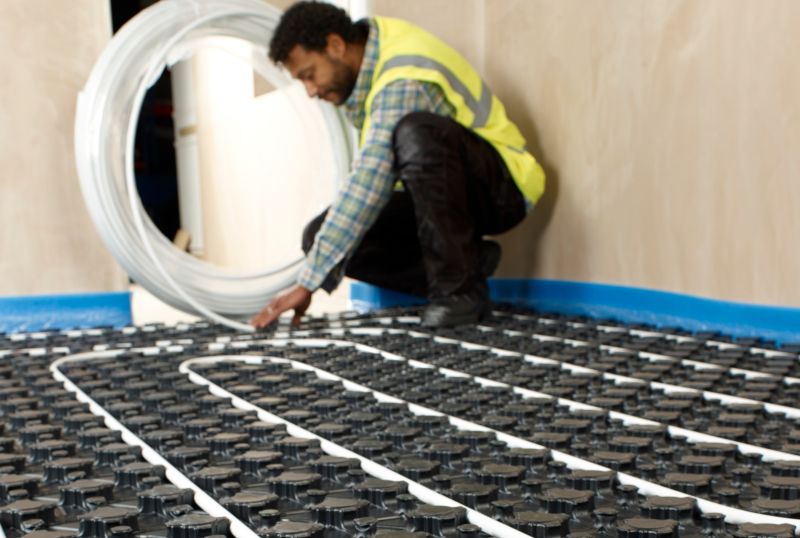
As a result, to get the best from heat pumps, we need to look to technology such as UFH which runs at a lower temperature, allowing a heat pump to run within its optimal temperature range. For example, Wavin’s Comfia system runs between 30 and 50°C, as opposed to the 60 and 70°C required for traditional radiators.
Pairing a heat pump with UFH ensures the system can deliver comfortable temperatures without placing excessive demand on the heat pump. By optimising the way these technologies work together, homeowners can benefit from a more balanced and energy efficient heating solution that allows the heat pump to operate at its highest sustainable performance.
However, the benefits of UFH solutions don’t stop there. UFH systems free up wall space and offer greater flexibility over room layouts and interior design. Alternatives to wall-fixed heating solutions can also be also quieter, providing a more comfortable experience for residents and homeowners alike.
Future-ready solutions
Promoting the pairing of UFH and heat pumps isn’t just a technically sound way to enhance comfort and reduce running costs for homeowners – it also makes strong commercial sense for installers. As regulations continue to tighten, those who proactively offer solutions that deliver both immediate benefits and long-term value can position themselves ahead of market and policy shifts.
Rather than reacting to changes, forward thinking installers can differentiate themselves by effectively articulating the potentially powerful long-term savings that high efficiency systems bring; at a time when energy performance is becoming increasingly important to both homeowners and policymakers.
To support installers and meet the growing demand for flexible, high-performing UFH, manufacturers like Wavin are offering comprehensive system solutions that cater to a wide range of build types. Applications like Wavin’s WarmDeck, provide integration with existing heating systems for more complex installations – including upstairs spaces and retrofitting.
But support doesn’t stop at the product. Wavin is also investing in installer expertise through its Wavin Installer Network (WIN) – a free-to-join initiative offering tailored training, practical support, and priority technical guidance across UFH, ventilation, and heat recovery systems.
Smarter heating
The case for pairing heat pumps and UFH together is no longer one that can be considered ‘a nice idea’ – it’s practical, profitable and aligned with the direction in which the market is heading.
Image: Wavin