
James Hodgson, National Training Manager at Ariston, highlights some of the key aspects of Heat Pumps and looks at how installers can get involved.
The UK government has set ambitious targets to increase annual heat pump installations from 55,000 in 2021 to 600,000 by 2028 which will make the UK one of the largest heat pump markets in Europe.
For many gas installers, this transition to a new technology may feel challenging but it also presents an exciting opportunity. For those eager to futureproof their business, now is the moment to fully understand how heat pumps operate, where they deliver the greatest value, and how to confidently guide customers through the benefits.
The opportunity
Homeowners are becoming increasingly aware of both carbon reduction goals and the long-term energy savings that can be achieved with renewables. Rising gas prices and the volatility of fossil fuel markets have made electric and renewable heating solutions more attractive.
However, historically the biggest barrier to switching to heat pumps has been the cost of the product itself and installation. The Boiler Upgrade Scheme (BUS) has now been extended until 2028, which means homeowners can access grants of £7,500 towards the installation of an air or ground source heat pump, significantly reducing financial pressure for homeowners.
Whilst homeowners understand the need for the transition to heat pumps, they do not necessarily understand how the technology works and again this is an area where installers in the know can capitalise by educating their customers.
How Heat Pumps work
Air source heat pumps (ASHPs) do not generate heat in the way a gas boiler does. By extracting latent heat from the air or ground and amplifying it through a vapour compression cycle, they provide space heating and hot water at a fraction of the carbon cost.
Modern systems are far more capable than many people realise. Today’s heat pumps can operate efficiently even when outdoor temperatures drop to –15°C, dispelling one of the most common misconceptions among potential adopters.
For heating engineers, performance metrics are key. While the coefficient of performance (COP) is a familiar measure, heat pumps are better assessed using the seasonal coefficient of performance (SCOP). SCOP reflects average efficiency across an entire heating season, factoring in fluctuating outdoor temperatures and real-world usage. This makes it a more accurate indicator of how a system will perform day to day in UK homes.
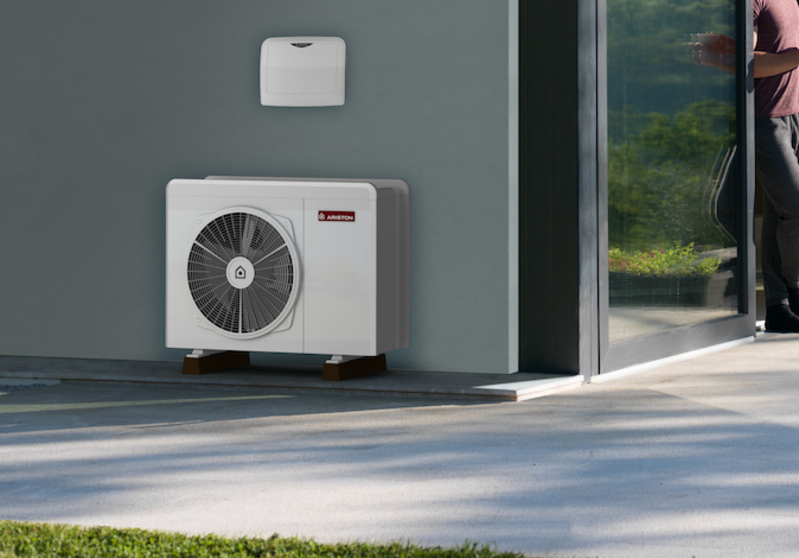
Most air-to-water ASHPs, including the Ariston Nimbus range, now achieve SCOP ratings of 3.0 or higher. In practical terms, that means for every kilowatt of electricity consumed, the system delivers around 3kW of usable heat.
Not a direct swap
Although heat pumps share some principles with traditional heating systems, installing one is not a direct swap for a gas boiler. As heat pumps operate at lower flow temperatures, typically between 35–55°C, it’s crucial to ensure radiators or underfloor heating are correctly sized and to also bear in mind that heat pumps work best in well-insulated properties.
Effective system design is equally important. Accurate heat loss calculations are essential, and heat pump installations require a more detailed approach than conventional systems. Installers must take into account insulation quality, thermal mass, room-by-room heat losses, and flow temperature curves to guarantee that the system performs as intended.
Controls also play a central role. Beyond giving homeowners an easy way to manage their heating, modern intuitive controls provide installers with powerful tools for commissioning, servicing, and troubleshooting.
Upskilling requirements
The UK currently faces a considerable skills gap, with too few qualified professionals to meet the Government’s 2035 heat pump installation targets. To seize the sales opportunities ahead, installers must ensure they hold the right qualifications.
While many manufacturers and industry bodies provide short, accredited training programmes, only MCS accreditation enables installers to carry out BUS funded installations.
Image: Ariston