
Rick Clarke, Product Manager, NIBE Energy Systems Limited, investigates the benefits of exhaust air heat pumps.
For installers, the race to decarbonise new homes isn’t just about adopting new technologies; it’s about finding solutions that are practical to fit, easy to maintain and deliver the performance developers need. In urban areas where outdoor space is tight and aesthetics matter, the options can quickly narrow. That’s why exhaust air heat pumps (EAHPs) are rapidly gaining ground across the UK.
Compact, all-in-one and designed to work without any external units, EAHPs are emerging as one of the most efficient ways to deliver low-carbon heating, ventilation and hot water in new-build and retrofit settings alike. For many developers and housing associations, they’re solving both a regulatory and a practical design challenge in one.
How they work
Unlike traditional air source heat pumps, EAHPs recover heat energy from the warm, stale air extracted from kitchens, bathrooms, and utility rooms. This energy is upgraded through the heat pump to provide heating and hot water. The cooled air is then discharged outside, ensuring good indoor air quality.
Because they harness indoor energy, EAHPs maintain consistent performance year-round, regardless of the weather, and this is a key benefit for developments where reliability matters. Integrated ventilation ensures compliance with modern building standards, making the system a natural fit for low-energy homes.
EAHPs are particularly well suited to new-build apartments and multi-residential schemes, where space is often limited and energy performance targets are high. They’re also a strong option for smaller, well-insulated homes that require efficient, compact heating solutions.
In retrofit projects, EAHPs can be installed often with minimal disruption, making them an attractive choice for housing associations and developers looking to decarbonise existing properties. More broadly, they support developments aiming to meet low-carbon and energy performance standards without the need for complex system designs. For installers, the all-in-one nature of EAHPs means faster installation, no external plant and fewer on-site complications, all helping to keep projects on time and on budget.
Why EAHPs?
– Lower carbon emissions: By drawing energy from indoor air, EAHPs reduce reliance on fossil fuels and support decarbonisation targets.
– High efficiency: Consistent performance throughout the year, even in colder months, helps keep running costs down.
– Compact, all-in-one design: No need for external condensers or plant rooms, making installation simpler and space requirements smaller.
– Improved indoor air quality: Integrated mechanical ventilation maintains fresh, filtered air while recovering heat that would otherwise be lost.
– Future-ready: Designed to help new homes meet the Future Homes Standard and other low-carbon building requirements.
A new generation
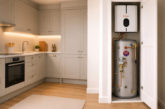
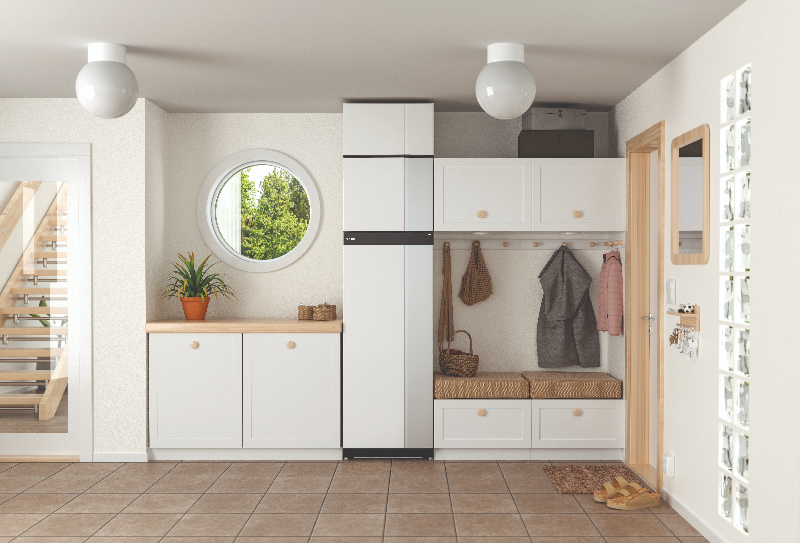
Models like the NIBE S735C offer a balance of performance and practicality, combining efficient heating, hot water and ventilation in a single, space-saving unit. With Quiet Mark certification for low noise levels, a compact installation footprint and a SCOP of up to 4.6, the S735C is well suited to dense residential settings such as apartments and multi-dwelling developments.
The S735C reflects the growing role of EAHP technology in the UK’s low-carbon housing landscape. For installers, systems of this type simplify on-site delivery as there is no external plant, faster installation and fewer coordination challenges.
An example of EAHP technology at scale can be found at Royal Winchester House in Bracknell, a residential development comprising 337 one- and two-bedroom apartments. Each apartment is fitted with a NIBE F730 exhaust air heat pump, providing heating, hot water and ventilation from a single compact unit installed within a service cupboard of around 0.6m². This approach eliminated the need for an external plant, preserved the clean architecture of the building, and supported compliance with Parts L, F, and G of the Building Regulations.
To demonstrate how the technology continues to evolve, one of the apartments was upgraded with the newer NIBE S735C, showcasing how next-generation EAHPs can deliver even higher performance, lower sound levels and smart connectivity. Together, the original installation and the show apartment highlight how EAHPs can scale effectively while adapting to changing regulatory and design requirements.
Image: NIBE